
Coupling Agents & Compatibilizers for Compounding
In heavily filled flame-retardant compounds, glass/wood fiber composites, and toughened polyamides, interfacial dispersion determines mechanical retention and aging life. HuntHumber compounding grades deliver high anhydride reactivity at practical dosing levels.
Engineering considerations
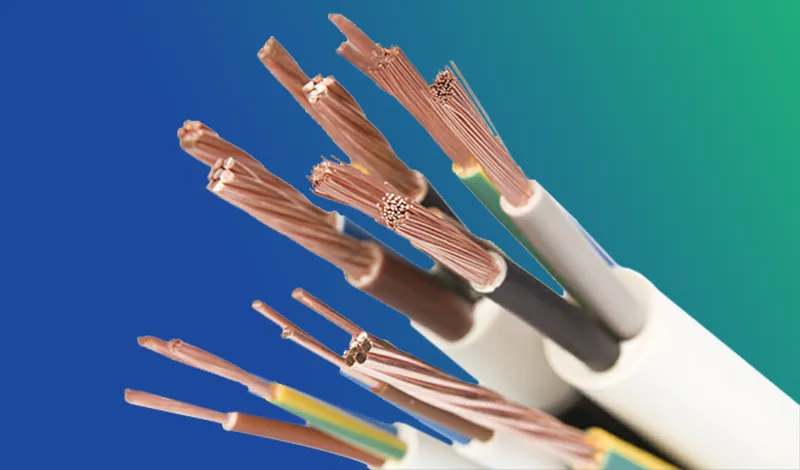
Halogen-free flame-retardant (LSZH / HFFR) cables
CT1516 (PE base, MFR 1.9) and CT1216 (LLDPE base, MFR 1.2) use High MAH grafting to couple high-loading Al(OH)₃ and Mg(OH)₂ fillers into polyolefin cable jackets, improving tensile elongation, filler dispersion, and thermal aging stability.
Sub-zero polyamide (PA6 / PA66) impact modification
PGN20 (Tg < -54 °C, Medium MAH) and PGN4018 (Tg < -50 °C, High MAH) are MAH-grafted POE elastomers that react with polyamide amine end groups to achieve strong room- and low-temperature notched impact resistance in automotive and E&E housings.
Natural-fiber WPC & glass-fiber reinforced PP
WPX500 (Very High MAH > 1.0%, LLDPE base) upgrades flexural modulus and reduces water absorption in PE wood-plastic composites. PX316 (High MAH PP base, MFR 60) wets glass and natural fibers rapidly in injection-molded RGF-PP and PP-WPC.
Grade selection checklist
- HFFR / LSZH cable compounds with ATH or MDH fillers: evaluate CT1516 or CT1216.
- PA6 / PA66 impact modification & glass-filled PA: evaluate PGN20 (Medium MAH) or PGN4018 (High MAH).
- PE wood-plastic composites (WPC): use WPX500. Glass-fiber or wood-fiber PP composites: use PX316.
Grade comparison
| Grade | Base Resin | Density | MFR | Melting Point | Vicat / Tg | MAH Content | Bonds To / Targets | Processing / Use |
|---|---|---|---|---|---|---|---|---|
| CT1516 | PE | 0.928 | 1.9 | 120 °C | 95 | High | PE, mineral fillers | Compatibilizer / coupling agent |
| CT1216 | LLDPE | 0.910 | 1.2 | 113 °C | 92 | High | Mg(OH)2, Al(OH)3, mineral fillers | Compounding agent |
| PGN20 | POE | 0.872 | 1.8 | 52 °C | Tg < -54°C | Medium | PA | PA modifier |
| PGN4018 | POE | 0.875 | 1.2 | 58 °C | Tg < -50°C | High | PA | PA modifier |
| WPX500 | LLDPE | 0.910 | n.a. | 102 °C | 88 | Very High | Natural fibers | WPC compounds |
| PX316 | PP | 0.904 | 60 | 160 °C | 144 | High | Glass fibers, Natural fibers | RGF-PP and WPC |
Application FAQ
- What is the difference between CT1516 and CT1216 for HFFR cables?
- Both feature High MAH grafting for mineral-filled flame-retardant systems. CT1516 is PE-based (density 0.928 g/cm³, MFR 1.9, Tm 120 °C), while CT1216 is LLDPE-based with lower density and flow (0.910 g/cm³, MFR 1.2, Tm 113 °C) suited to Mg(OH)₂/Al(OH)₃ compounding.
- How do I choose between PGN20 and PGN4018 for nylon toughening?
- Both are MAH-grafted POE impact modifiers. PGN20 offers slightly lower Tg (< -54 °C) and higher flow (MFR 1.8) with Medium MAH; PGN4018 provides High MAH grafting (MFR 1.2, Tg < -50 °C) for stronger reactive coupling at lower dosages or in glass-filled PA.